

So bro, DMZ Modern Warfare 4 is officially confirmed, and this time it’s not some side mode nobody plays after week one. Modern Warfare 4 is bringing DMZ back as Call of Duty’s flagship extraction shooter, built directly on top of the MW4 multiplayer foundation. Infinity Ward and Activision have confirmed it as a full second campaign pillar rather than a bonus playlist, and it’s landing alongside the rest of the game on October 23, 2026.
Table of Contents
Here’s everything currently confirmed (plus what’s still rumored) about DMZ Modern Warfare 4.
What Is DMZ, Exactly?

For anyone who missed the original run, DMZ is an extraction shooter mode, the same genre Arc Raiders has been running with lately. You drop in solo or with a squad, complete objectives, loot the map, survive whatever finds you, and get out before the clock (or another squad) ends your run.
The difference this time is scale. Infinity Ward is calling this version a deeper, more persistent combat experience, rebuilt using feedback from the original DMZ beta. It’s tied directly into the Modern Warfare 4 campaign itself. You’re playing a deniable, off-the-books CIA asset, and your job is securing advanced military tech before it lands in the wrong hands.
The Setting: Hajin, DMZ’s New Exclusion Zone
DMZ Modern Warfare 4 takes place in Hajin, a sprawling, irradiated exclusion zone forged by the aftermath of the Modern Warfare 4 campaign, according to the official Call of Duty blog. It’s a tripoint region near Russia and the Korean Peninsula, evacuated months earlier and now scattered with abandoned military hardware. Infinity Ward is calling it one of the largest maps they’ve built.
What we know about the map so far:
- A melted-down reactor site
- A heavily secured prison complex
- The remains of a former city, now abandoned
- A fortified underground military base
- Sealed-off secret areas and water-locked points of interest
- An extreme fallout zone on the map’s eastern edge requiring a gas mask and radiation gear, high risk, but better loot
Call of Duty has also confirmed on the official Call of Duty blog that Hajin will expand across future seasons, with new Russian territory planned as part of the ongoing seasonal story. That means there’s an entire second chunk of the DMZ Modern Warfare 4 map nobody’s seen yet.
How You Actually Get Into a DMZ Modern Warfare 4 Match
Deployment isn’t locked to one method. You can infil on foot if you want to stay quiet, by helicopter if you want speed, by plane if you want maximum reach, or drop in with a vehicle already waiting for you. Each choice is a trade-off. Foot keeps you hidden, air gets you there fast but paints a target on your back.
Once you’re in, no two runs play the same. Living AI, dynamic weather, and other squads roaming the map mean objectives shift constantly. Exfil happens via helicopter or sky hook. Blow the extraction, and you’re not just walking away empty-handed, your operator’s kit is on the line, and buying them back later isn’t cheap in Modern Warfare 4.
Three Ways to Play DMZ in Modern Warfare 4
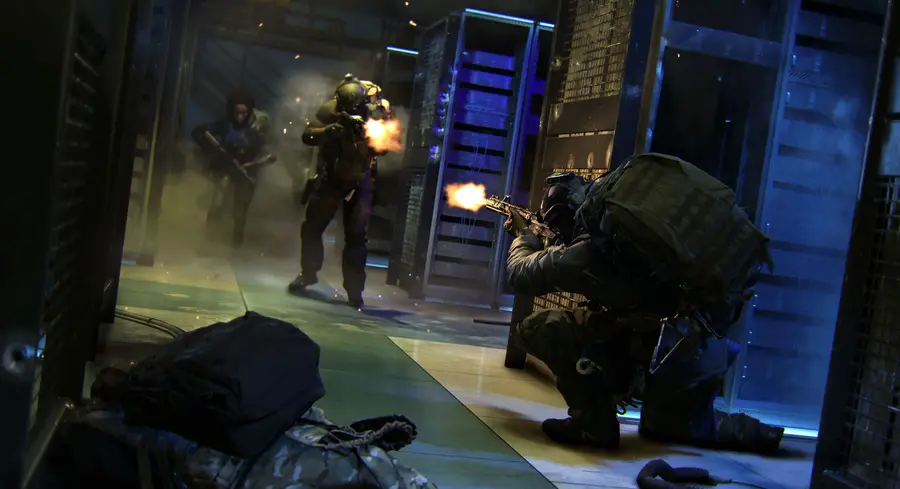
Infinity Ward is launching three core pillars for DMZ Modern Warfare 4, plus open free roam.
1. Story Missions
If you followed how Black Ops 7’s campaign handled pacing, this pillar will feel familiar in structure, just tied to a persistent open world instead of linear missions.
These extend the Modern Warfare 4 campaign directly. Unique objectives inside specific points of interest, built for solo or squad play, running inside a live DMZ server alongside other operators. Even on a story run, you’re never technically alone, though everyone else in your lobby is likely running their own story mission too.
This is the part fueling the biggest rumor floating around, that DMZ isn’t a side mode at all but functionally a second campaign. The framing backs it up. Your operator is a deniable CIA asset, story missions continue directly from the campaign’s ending, and Infinity Ward has confirmed more missions and story context will roll out every season.
2. Dynamic Operations
Think contracts, but with more teeth. These are multi-step objectives generated fresh every match: neutralizing abandoned weapons programs, securing critical assets, high-risk rescues, assaults on hostile positions. They’re designed to escalate tension and spill activity across a wider chunk of the map, so don’t be surprised if you cross paths with another squad mid-operation.
3. Free Roam & Side Ops
No script here. Hunt gear, take down enemy lieutenants, repair vehicles, hit supply drops, or climb damaged radio towers, whatever you want, at whatever pace you want. Slow and careful or full chaos, it’s entirely your call.
A Living World: Weather and AI
Weather actually changes how you play. Sudden downpours kill visibility, and fog banks turn routes you know by heart into a gamble. That same fog also messes with AI vision, so it cuts both ways depending on how you use it.
The AI itself is built to behave like a real organized force. Squads coordinate, push you out of positions as a unit, and call in reinforcements, including tanks and armored backup, if you start wiping out their numbers. Get into a big enough firefight, and you can quickly find yourself facing down a small army.
Stealth Meter and Threat System
Two new systems are meant to separate players who move smart from players who get farmed for loot.
The stealth meter shows up as a visual cue that shifts from white to yellow to orange as AI gets closer to spotting you, then turns red once they know exactly where you are. It’s a genuinely useful tool for solo players trying to line up an ambush before a fight even starts.
The threat system tracks how much noise you’re making and escalates the response accordingly. Early fights bring in local forces. Keep going and you’ll draw heavier reinforcements, then attack helicopters and armored units, and eventually full Death Squads and lieutenants hunting you specifically. You can back off and cool down, or lean all the way into the chaos. Both approaches pay off differently.
The Enemy Ladder

DMZ’s escalating threats echo what Warzone players already deal with in modes like Rebirth Island and Verdansk, just with a heavier PvE layer stacked on top.
Standard hostiles guard key areas, run convoys, fly choppers, and roam in squads. Above them sit Lieutenants, high-value targets leading specialized units, who drop dog tags on death that tie into the story and are worth serious cash or exclusive gear when extracted.
Beyond that, expect roaming threats like tanks, drone swarms, Death Squad helicopters, Juggernauts, and Elite Strike Teams. These aren’t random difficulty spikes. They’re the reason you don’t rush every compound with a pistol and confidence.
The FOB: Your Home Base Between Runs
Between deployments, you live in the Forward Operating Base, part social hub, part progression system. Confirmed features include:
- The Stash: a persistent, upgradeable inventory that carries across deployments
- Your Wallet: cash earned from missions, used to buy weapons, attachments, intel, or rescue MIA operators
- Gunsmith: build weapons with up to five attachments plus an apex attachment; weapon progression carries across both multiplayer and DMZ
- Weapon Vendor: rotating specialized gear delivered straight to your stash
- 3D Printer: craft attachments and specialized gear from materials looted in the field
- Firing Range: test builds before taking them into a live match
- Active Duty Board: manage your operator roster before deploying
- Boss Board: pay for lieutenant intel and pin their location on the map
- Bounty Leaderboard: a weekly-updating list of the most aggressive PvP players, who you can hunt down for a reward, and it knocks them off the board in the process
The FOB is also where you pick your operator roster. Each operator has their own persistent backpack, loadout, and skill tree, and the roster matches the same operators you’ll recognize from multiplayer. Fancy running with Ghost or Price? That’s the plan.
Each operator’s skill tree splits XP into combat, scavenging, and support-style branches, so you can build a PvP specialist, a dedicated loot runner, a stealth-focused infiltrator, or whatever fits your playstyle. XP is earned generously across story missions, dynamic ops, side ops, and takedowns, and you keep your operator’s XP even if they die in the field. The catch: the more leveled up an operator gets, the more expensive they are to buy back after going down. Dying costs your backpack, not your season-long progress. If an operator goes MIA, you can spend cash at the FOB to send a rescue team rather than starting over from scratch.
Loot, Crafting, and the 3D Printer
Loot is tied to location rather than scattered randomly. Police stations carry combat gear, hospitals hold scarce medical supplies, residential buildings yield crafting materials, and the high-threat fallout zones hide the rarest components.
Materials you collect break down automatically once you’re back at the FOB, where the 3D printer turns them into night vision goggles, parachutes, backpacks, plate carriers, tacticals, lethals, painkillers, radiation blockers, and field upgrades (one-use only, they don’t recharge mid-match). Some printer recipes can only be crafted from a printer found while actually in the field, not at the FOB, so learning the map matters as much as learning the loot tables.
Survival Systems: Tourniquets vs. Self-Revives
This softer death system is a notable shift if you’re used to how unforgiving other extraction shooters can be about losing your kit.
Two systems change how dying actually feels this time around. The tourniquet is new. Without a self-revive equipped, you can tourniquet yourself into a wounded state and keep fighting, though you’ll need extra meds to get back to full health. It’s forgiveness with a cost attached.
Self-revives are still the cleaner option, restoring full health on use, but they’re noticeably harder to find than tourniquets. Combined with MIA rescues back at the FOB, the whole system is built to feel less punishing than the classic extraction-shooter wipe format. You’re meant to take risks, knowing there’s a way back.
Rumors Worth Watching
Similar to how Red Dead Redemption 3 rumors have circulated for months before anything official, treat the following as speculation until Infinity Ward confirms it directly.
A few things haven’t been locked into official language yet but keep surfacing across leaks and the wider Modern Warfare 4 cycle:
- DMZ may be tied to owning Modern Warfare 4 rather than free-to-play. If true, that would likely cut down on the hacker problem, since repeat bans become expensive fast.
- Ghost is rumored to be the central figure driving DMZ’s story, potentially setting up a future Ghost-focused game once the rebooted Modern Warfare universe wraps up.
Both are unconfirmed for now, so treat them as rumors until Infinity Ward says otherwise.
Final Thoughts
Between the campaign tie-in, the living AI, the FOB progression system, and a map built for seasonal expansion, Modern Warfare 4’s DMZ looks like it’s meant to be a genuine second pillar of the game rather than a side experiment. We’ll update this post as more gets confirmed.
If you’re following the Modern Warfare 4 rollout, also check out:
Call of Duty: Black Ops 7 Review
Call of Duty Games Ranked: Top 20 COD Titles
Black Ops Royale Operator Orders: Complete Guide